Showing posts with label Semantic Web Services. Show all posts

Thursday, March 29, 2007

Semantic Technology Annual Conference 2007 in Korea

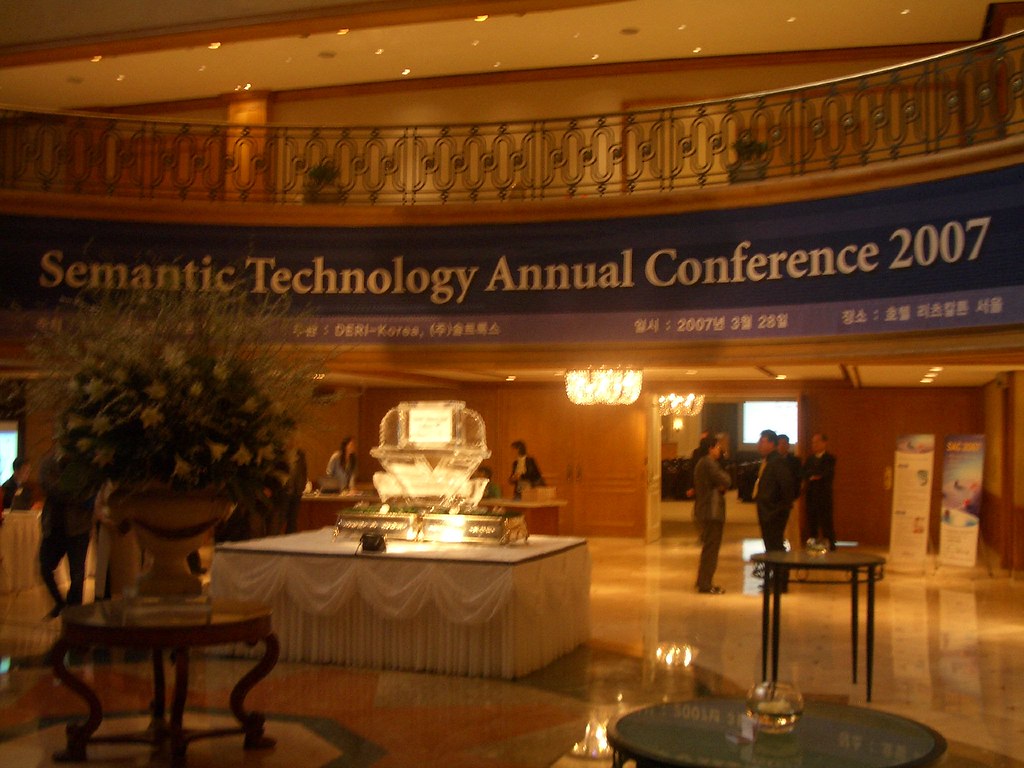
Yesterday, March 28, 2007 the South Korean Semantic Technology Annual Conference took place. Over 200 people attended, of which about 175 came from industry; a very good sign of industrial interest in corporate semantic web technology. The conferene was hosted by SemTech Korea and took place in the RitzCarlton Hotel en Seoul (see phote left). The conference was chaired by Dr. Lee, CEO of Saltlux.


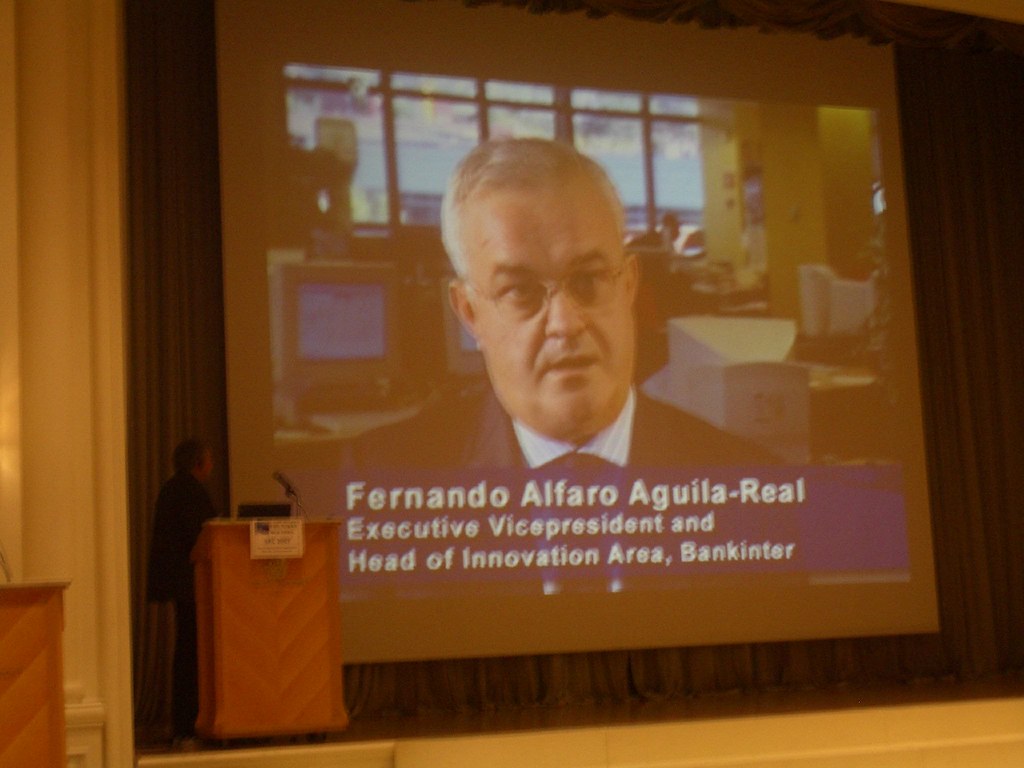
Dieter Fensel of Deri gave a talk on Service Web3.0. The future web will contain billions of services and proper management of those services (discovery, composition, execution, etc.) requires a semantic infrastucture. Prof. Fensel also showed the famous "DIP" movie that explains the business value of Semantic Web Services for industry (see photo below for the financial industry). I gave a talk on today's applications that use Semantic Technology; 7 concrete applications that we built in iSOCO for clients. Mike Ullrich from Ontoprise presented use cases of Semantic Applications. Prof. Riichiro Mizoguchi from Osaka University gave a presentation on the industrial impact of Ontology Engineering.
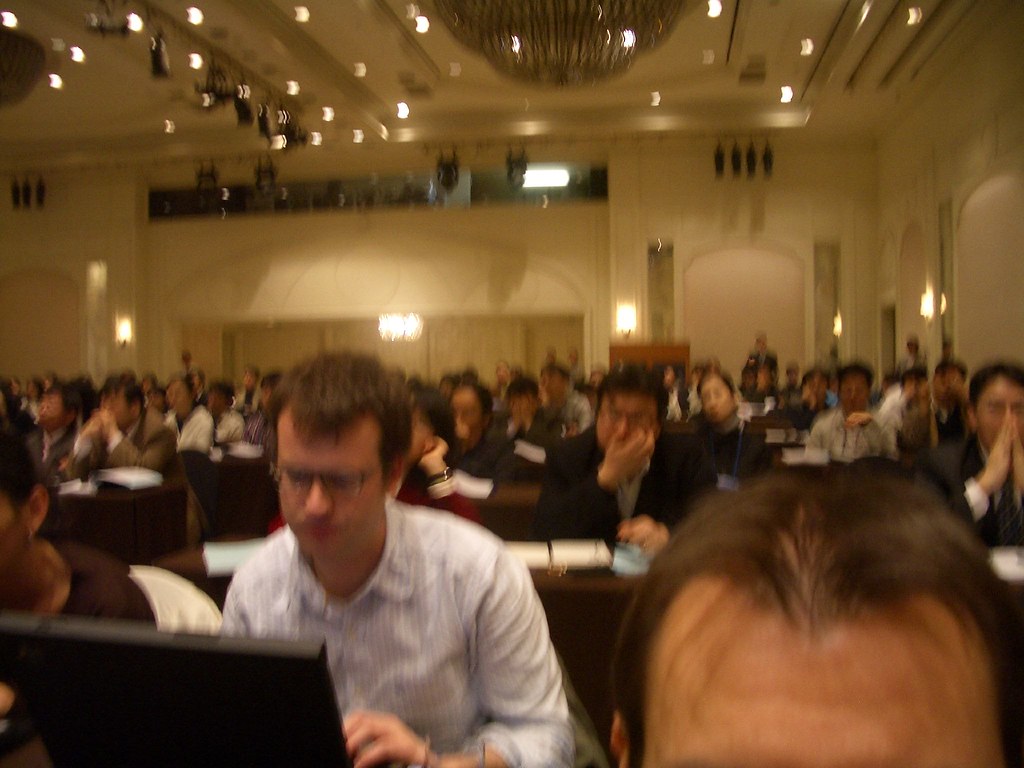
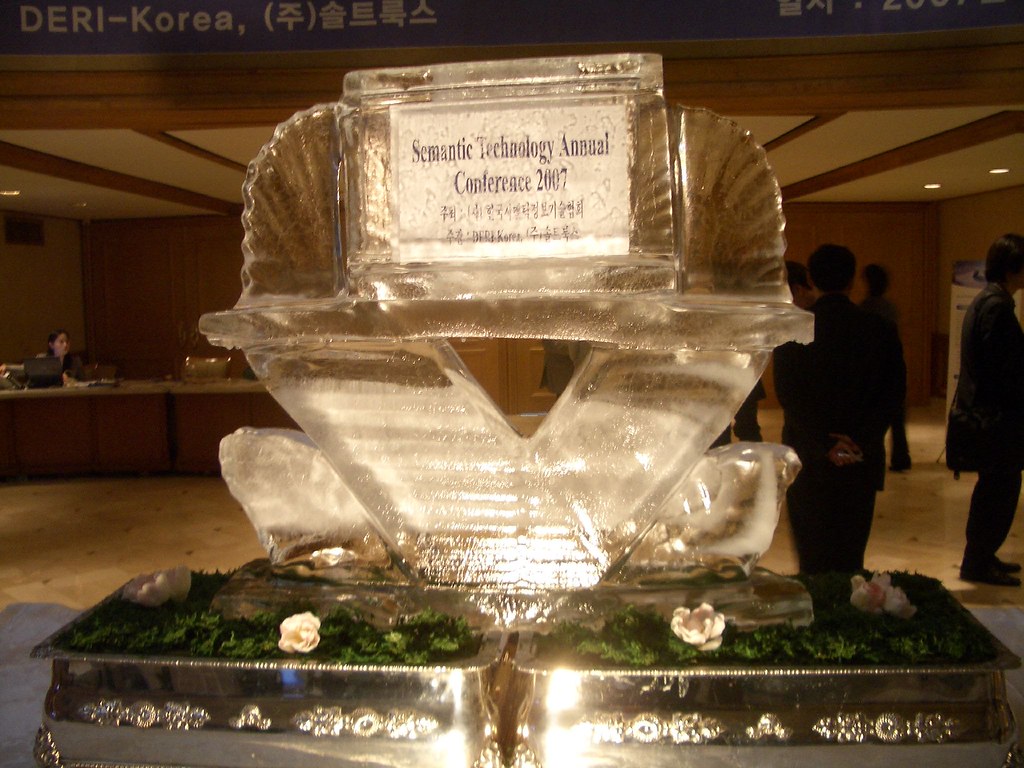
Below a few photos to give an impression of the conference.


This is the first time that I have been to Seoul, South Korea. In 1997 I visited Japan for the IJCAI conference. South Korea is a remarkable country. 20 years ago it was a poor county, now it is the eleventh economic power in the world. It is one of the global leaders in penetration of broadband internet and home of the world-wide known brands such as LG, Samsung, Kia, Hyundai and Daewoo. My impression of the city is a mixture between oriental and western (especially US, several Starbucks ...) culture. Doing business in Korea is also quite different from Europe, but while doing and reading one learns.

The photo below is the view on Seoul from my hotel room on the 14th floor.

Wednesday, January 10, 2007

The Value of Semantic Web Services for Business and Society

In an earlier post, I wrote about the DIP project and mentioned there: "There is also a movie available explaining the value of the project in terms of three particular sectors, e-government, telco, and e-banking." The movie has now been finished and released and can be watched in this blog, as well as on the DIP home page.

Again, DIP has been a very ambitious, yet successful project which potential for major impact in society and businesses. In a few months, I hope to be able to be a bit more precise about some of those business opportunities.


If the movie doesn´t show, please click here to view it on the KMI website.

Some quotes from the Final Review Report:

"... the work that has been carried out by the DIP consortium and the way in which the consortium has carried out that work. The DIP partners have ensured that the project has become a flagship project."

"Overall, DIP has been a paragon of collaborative research. "

"The reviewers would be pleased if DIP was drawn on by the CEC as an exemplar project, in order to demonstrate the increased value of carrying out international collaborative research."

"Technically the project has produced excellent results "

Enjoy!

Friday, October 27, 2006

Final review DIP project


This week we celebrated the final review of the DIP project (http://dip.semanticweb.org/), which stands for Data, Information, and Process Integration with Semantic Web Services. DIP is a 16 MEuro, 3 year project partially funded by the European Commission, involving about 20 top class industrial and academic partners, including SAP, BT, iSOCO, Unicorn (IBM), Hanival, OU, EPFL, FZI, etc.). DIP finishes on December 31, 2006.

During the final review of two days, 40 members of the consortium presented the results to three external experts hired by the EC, and to the EC Project Officer. Wonderful new technology has been developed that has the potential to change businesses in the future. In the context of this blog, I am especially interested in what happens with all this technology once the project has finished. Of the two day review, almost half a day was dedicated to exploitation plans, which in itself is a positive exception. Exploitation plans lay out the realistic intentions of the consortium to use (apply, commercialize) project results beyond the scope of the project.

The highlights of the exploitation session included:

  • Many different kind of commercial exploitation plans
  • Firm commitment to create a new company
  • Acquisition of DIP partner by large IT company
  • Vertical exploitation of case studies in particular sectors
  • Horizontal exploitation through acquisition of DIP partner
  • Joint exploitation plans for large organizations and SMEs
  • All licensing for core technology is Open Source
  • Academic exploitation through take up in many recent R&D projects
  • Strong influence on standards in two leading standards bodies

In three or five years we will see how many of the exploitation plans have become reality.

Needless to say, that the review was a big success (flagship project, an example).

There is also a movie available explaining the value of the project in terms of three particular sectors, e-government, telco, and e-banking. I will make the movie later available on this blog.